
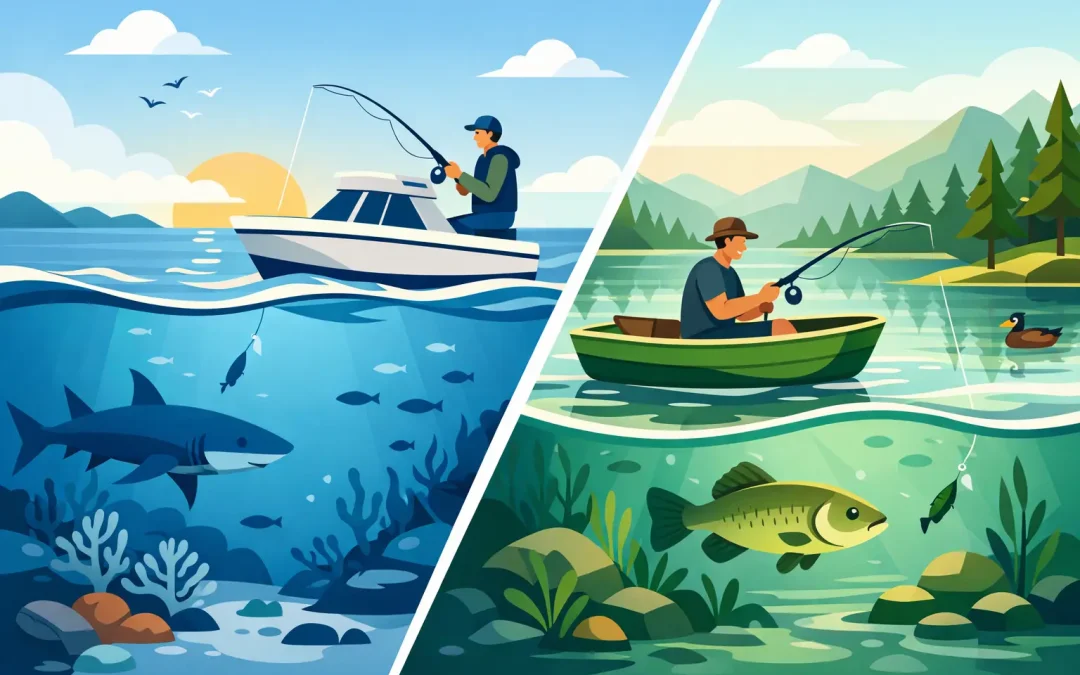
A fishing trip can change completely within a few miles of the coast. Sea fishing versus lake fishing is not simply a choice between saltwater and freshwater. It affects the boat you need, the species you may catch, the weather you watch, the gear you pack, and how much of the day becomes part of the adventure.
For visitors staying near Selje, both options can be part of the same holiday. The sea is close, open, and full of possibilities for a boat day. Lakes and rivers offer a quieter setting, often with lighter equipment and a slower rhythm. The best choice depends on who is traveling with you and what you want your fishing day to feel like.
Sea Fishing Versus Lake Fishing: The Main Difference
Sea fishing is usually more active, more weather-dependent, and more varied from one outing to the next. Water depth changes quickly along the Norwegian coast, currents can be strong, and fish may be found near reefs, drop-offs, kelp beds, or open water. A good day often means using a boat to reach productive ground and moving when conditions or fish activity change.
Lake fishing is generally more contained. You may fish from shore, a small boat, or a quiet bank, focusing on a particular inlet, shallow area, stream mouth, or underwater structure. The setting can feel less technical at first, especially for beginners, although catching trout or other freshwater fish still takes patience and local knowledge.
Neither is automatically better. Sea fishing suits travelers who want a full coastal experience with larger water, boat travel, and the chance of a mixed catch. Lake fishing suits those who enjoy calm surroundings, a simple setup, and time spent observing one piece of water carefully.
What You May Catch in Norway
The attraction of sea fishing is variety. Along the coast near Selje, anglers may target cod, pollock, coalfish, mackerel, ling, haddock, and flatfish, depending on season, depth, and location. Some species feed high in the water, while others hold close to the seabed. That means a single outing can involve casting, jigging, drifting, and fishing deeper with bait or larger lures.
The possibility of bringing home a good meal is a major part of the appeal. Pollock and cod can provide excellent fillets, while mackerel offers fast action when it is running. A boat with a chartplotter and echo sounder helps anglers locate depth changes and fish-holding areas rather than guessing across a large stretch of sea.
Lake and river fishing is often more focused on freshwater species such as trout, char, or salmon where regulations allow it. The reward may be less about numbers and more about the setting and the moment. A trout rising near a calm shoreline can make an evening memorable even if you catch only one fish.
Freshwater fishing also tends to be more seasonal and more regulated by the specific water. Fishing permits are commonly required for lakes and rivers, and rules may set limits on methods, catch size, and when fishing is allowed. Sea fishing in Norway is generally more accessible for visitors, but responsible anglers should still follow local rules on minimum sizes, protected species, and catch limits.
Gear and Skills: Big Water or a Light Setup?
Sea fishing often calls for stronger equipment. Saltwater fish can be powerful, and deeper water requires lures or rigs that reach the right depth. A medium-heavy rod, a reliable reel, braided line, jigs, sinkers, hooks, and a few different lure colors make a practical starting point. Warm layers, waterproof outerwear, sturdy shoes, and gloves matter just as much as tackle when the wind comes up.
The boat is part of the gear, too. A well-equipped rental boat with a dependable outboard, GPS chartplotter, echo sounder, and electric start gives visitors more confidence on unfamiliar water. It allows you to travel safely, monitor your position, and fish with a better understanding of the seabed below.
Lake fishing can be lighter and simpler. A spinning rod with small spinners, spoons, or soft baits may be enough for many situations. Fly fishing is another enjoyable option where conditions and local rules suit it. You can often carry everything in a small backpack, walk to a promising shore, and fish for an hour or two without planning a full boat outing.
That simplicity is especially useful for families. Younger anglers may enjoy casting from shore, watching for ripples, and taking breaks whenever they like. On the other hand, older children and adults who are excited by boats, navigation, and the chance of larger fish may find sea fishing far more engaging.
Weather Changes the Decision
On the coast, weather deserves respect. A bright morning can still bring wind, chop, rain, or changing visibility later in the day. Before heading out, check the forecast, understand the boat, wear appropriate flotation equipment, and be realistic about the experience level of everyone aboard. A shorter trip close to shore is often the right call when conditions are uncertain.
This is one of the clearest trade-offs between sea and lake fishing. The sea can offer exciting fishing and dramatic scenery, but it asks you to plan around conditions. Lake fishing is usually more forgiving because the water is sheltered and access is simpler. Rain may still affect comfort, but it rarely changes the basic safety picture in the same way as an exposed boat trip.
Wind can also affect how you fish. Drifting a lure or bait over a deep coastal edge can be productive, but too much drift makes it difficult to stay over the right ground. On a lake, a breeze can help cover the sound of your approach and create movement on the surface, though strong wind can make casting difficult there as well.
The Pace of the Day
A sea fishing day often has a natural structure. You prepare the boat, travel out, watch the coastline open around you, choose a spot, and adjust as the conditions develop. The fishing is only part of it. There is coffee in a thermos, sea air, conversations between drifts, and the satisfaction of returning to harbor with a catch to clean and cook.
At Grendabu, private harbor access and rental boats make that kind of day easier to organize. You can spend the morning on the water, return to a fully equipped kitchen to prepare your catch, and enjoy an outdoor meal with the sea in view.
Lake fishing fits more easily around the rest of a vacation. You can take a relaxed morning walk, fish for a few hours, visit a beach or local attraction, then try again in the evening when the light softens. It can be a peaceful break from a busier itinerary rather than the main event of the day.
For couples, the choice often comes down to mood. Sea fishing feels adventurous and shared, especially when you are learning a new stretch of coast together. Lake fishing can feel more private and unhurried. For a group of friends, a boat outing often creates more energy and friendly competition. For mixed-age families, combining one sea day with an easy freshwater session can keep everyone happy.
Choose the Fishing That Fits Your Holiday
Choose sea fishing if you want to use a boat, explore the coast, fish deeper water, and have a chance at several saltwater species. Plan it for the best weather day of your stay, especially if it is your first time on Norwegian coastal water. Give yourselves enough time to learn the boat, reach the fishing grounds, and enjoy being outside rather than rushing back.
Choose lake fishing if you prefer a calm setting, lighter gear, and a flexible outing that can last an hour or an entire afternoon. It is a good choice when the coastal forecast is rough, when you want a quieter day, or when someone in your group is not comfortable on a boat.
The strongest fishing holidays leave room for both. Spend one clear day following the coast by boat, then save a still evening for freshwater and a simpler cast. Whether the line drops into deep saltwater or lands beside a quiet shore, the best plan is the one that gives your group time to enjoy where you are.
Recent Comments